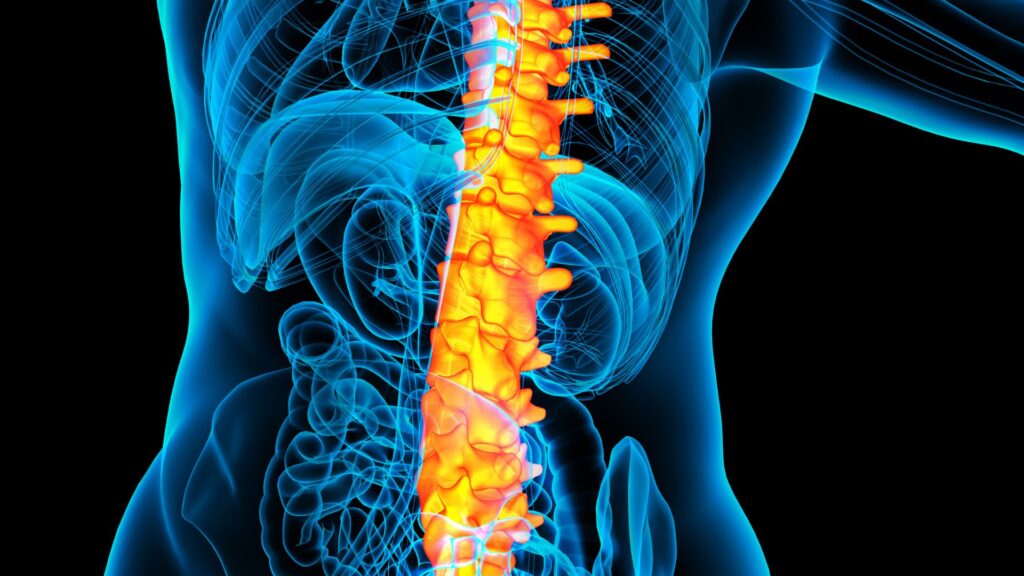
Minimally Invasive Spine Surgery in Bellevue, WA
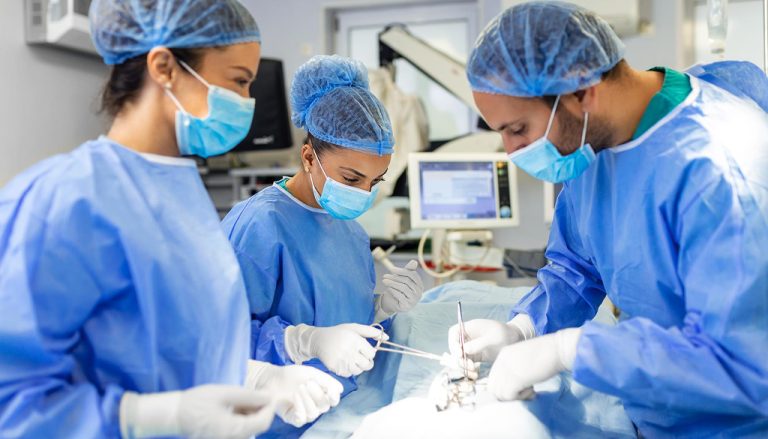
Minimally Invasive Spine Surgery (MISS) allows Dr. Kenneth Nwosu, MD, MBA, to treat complex spinal conditions using modern techniques that require smaller incisions and cause less damage to surrounding muscles and tissues. Patients benefit from reduced postoperative pain, minimal scarring, faster recovery times, and shorter hospital stays. Dr. Nwosu focuses on combining precision, safety, and advanced technology to ensure optimal results for each procedure—helping patients return to normal activities more quickly while maintaining spine stability and function.
Smaller Incision. Faster Recovery. Less Pain.
Endoscopic Spine Surgery
Advanced Technique for Precise, Minimal-Access Treatment
Endoscopic Spine Surgery uses a small camera and tubular instruments to perform spine operations with minimal muscle disruption. This approach helps patients recover faster while reducing blood loss and infection risk.
Endoscopic procedures are especially effective for treating herniated discs, spinal stenosis, and nerve compression in both the cervical and lumbar spine.
Benefits of Endoscopic Spine Surgery:
- Smaller incision and minimal tissue trauma
- Shorter hospital stay or outpatient-based procedure
- Faster return to daily activities
- Less postoperative discomfort
Common Endoscopic Techniques:
There are two common techniques used in endoscopic lumbar microdiscectomy:
1. Interlaminar Approach: This technique involves accessing the herniated disc through the space between the laminae of the vertebrae. It is typically used for central and paracentral disc herniations.
2. Transforaminal Approach: This method accesses the disc through the foramen (the opening where nerve roots exit the spine). It is often preferred for foraminal and extraforaminal herniations.
Motion Preserving Surgery
Treating Spine Disorders While Keeping Natural Movement
Motion Preserving Surgery (MPS) helps patients regain pain-free movement without losing flexibility in the affected spinal segment. Unlike fusion procedures that restrict motion, these surgeries maintain spine biomechanics and prevent stress on nearby vertebrae.
Goals of Motion-Preserving Surgery:
- Relieve pain caused by degenerative disc disease or herniated discs
- Maintain spine mobility for long-term performance and comfort
- Prevent adjacent segment disease after spine fusion
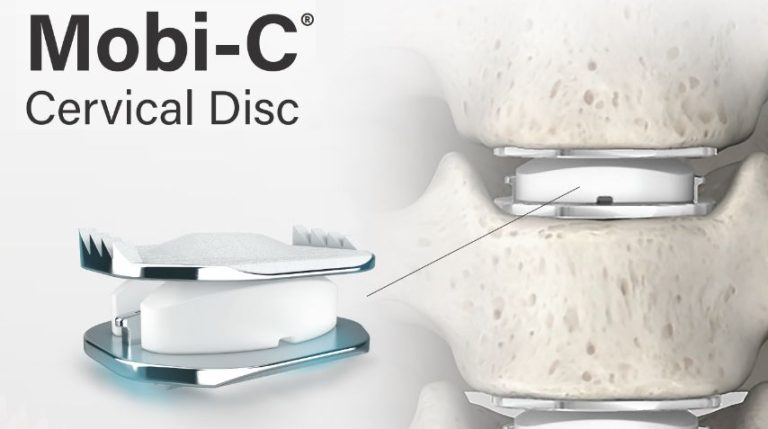
Cervical Disc Replacement

Cervical Disc Replacement (CDR), also called Artificial Cervical Disc Replacement (ACDR) or Cervical Arthroplasty, replaces a degenerated disc in the neck with an artificial implant. The goal is to relieve nerve compression while preserving natural neck movement. This advanced approach is ideal for patients with single or double-level disc collapse.
TOPS Procedure
The TOPS (Total Posterior Spine System) Procedure is a motion-preserving surgical solution for lumbar spinal stenosis or spondylolisthesis. Instead of fusing the spine, this implant maintains movement between vertebrae, allowing flexibility while stabilizing the spine and relieving pressure on affected nerves.
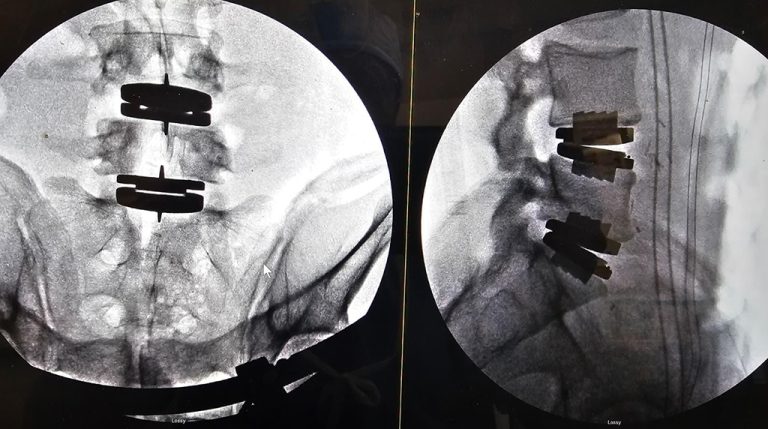
Lumbar Disc Replacement

Lumbar Disc Replacement (LDR), also known as Total Disc Replacement (TDR), replaces a deteriorated lumbar disc with an artificial one. This restores cushioning and spine motion while preventing issues in nearby segments. Dr. Nwosu uses advanced disc implants designed for long-term durability and natural movement.
Robotic Spine Surgery
Precision and Predictability with Enhanced Safety
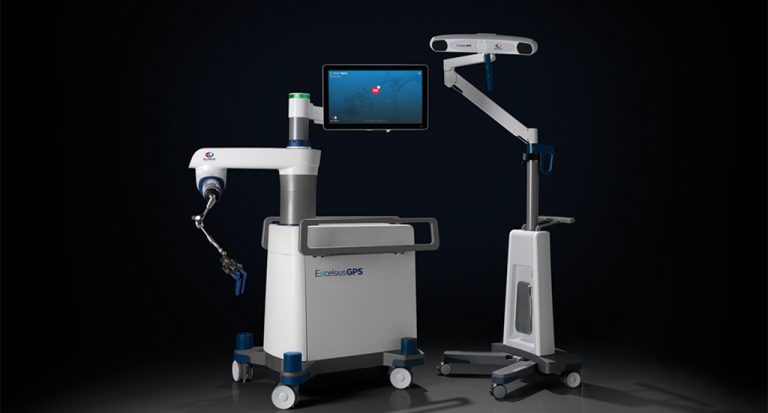
Robotic Spine Surgery uses robotic-assisted navigation to improve accuracy during spine procedures such as fusion or instrumentation. This technology enhances surgical control, reduces operative time, and minimizes tissue disruption, resulting in faster recovery and safer outcomes.
Benefits of Robotic Spine Surgery:
- Increases accuracy of screw placement and implant positioning
- Minimizes surgical trauma and soft-tissue damage
- Reduces risk of complications
- Enables smaller incisions and shorter hospital stays
This state-of-the-art system allows Dr. Nwosu to achieve outstanding surgical precision and consistency, especially in complex cases like deformity corrections or multi-level fusions.
Outpatient Spine Surgery
Precision and Predictability with Enhanced Safety
Robotic Spine Surgery uses robotic-assisted navigation to improve accuracy during spine procedures such as fusion or instrumentation. This technology enhances surgical control, reduces operative time, and minimizes tissue disruption, resulting in faster recovery and safer outcomes.
Advantages of Outpatient Surgery:
- Provides a safe alternative for qualified patients
- Minimizes hospital time and costs
- Reduces infection risks and improves comfort
- Supports rapid recovery with less downtime
Dr. Nwosu performs outpatient surgeries at accredited medical facilities using the latest technology and protocols for ultimate patient safety.
Client Testimonials
Why Choose Dr. Kenneth Nwosu, MD, MBA?
Excellence Through Compassion and Precision
Choosing the right spine specialist can make all the difference in your recovery and long-term quality of life. Dr. Kenneth Nwosu combines advanced training, surgical expertise, and a patient-centered approach to deliver care that is both effective and compassionate.
Expertise
Harvard-trained spine surgeon delivering expert care and exceptional surgical precision.
Innovation
Focused on minimally invasive procedures that speed recovery and reduce pain.
Compassion
Committed to personalized treatment, clear communication, and compassionate patient guidance.
Schedule a Consultation
Don’t let neck or back pain hold you back any longer. Dr. Kenneth Nwosu, MD, MBA, and his caring spine team in Bellevue, WA, specialize in advanced minimally invasive surgical techniques that help patients recover faster and move comfortably again. Whether you need a consultation or a second opinion, we’re here to guide you every step of the way.